
Your ChatGPT subscription can power the agent
OpenAI agent turns can authenticate through the subscription-backed Codex profile instead of forcing every install down an API-key-first path.
openclaw models auth login --provider openai
Jeff's field note on the OpenClaw update that moved OpenAI agent turns onto the native Codex harness, reduced prompt clutter with searchable tools, and shipped the quick-settings controls he helped contribute.
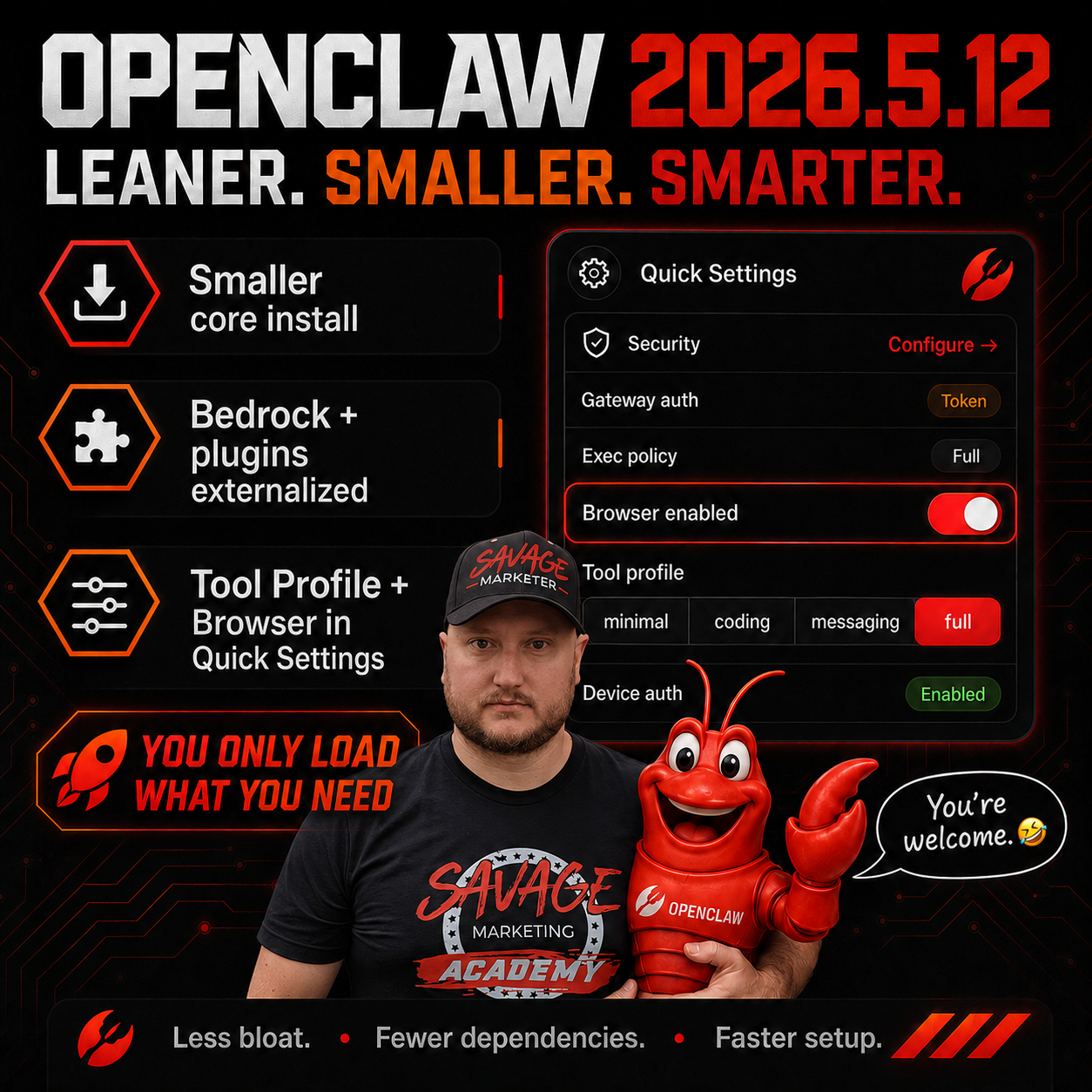
Codex owns the OpenAI turn. OpenClaw owns the product around the turn.
That is the clean boundary. OpenAI model reasoning, native tool continuation, code execution, workspace edits, and thread state now run through the runtime OpenAI is actively building for agentic work. OpenClaw still owns the agent experience around it: channels, persona, memory, sessions, cron, media, browser, gateway, and the OpenClaw tool layer.
This was not a cosmetic release note. It changed the operating boundary for OpenAI-powered agents inside OpenClaw.
OpenAI agent turns can authenticate through the subscription-backed Codex profile instead of forcing every install down an API-key-first path.
openclaw models auth login --provider openai
Instead of stuffing every eligible tool schema into the initial prompt, Codex can discover and load dynamic tools on demand. Less clutter means better tool selection and cleaner context.
The agent uses the OpenClaw message path when it needs to speak in a channel. Internal tool work stays private, quiet turns stay quiet, and rich replies have a real delivery route.
The accepted contribution was small in interface size and big in operator impact: move common setup decisions into quick settings.
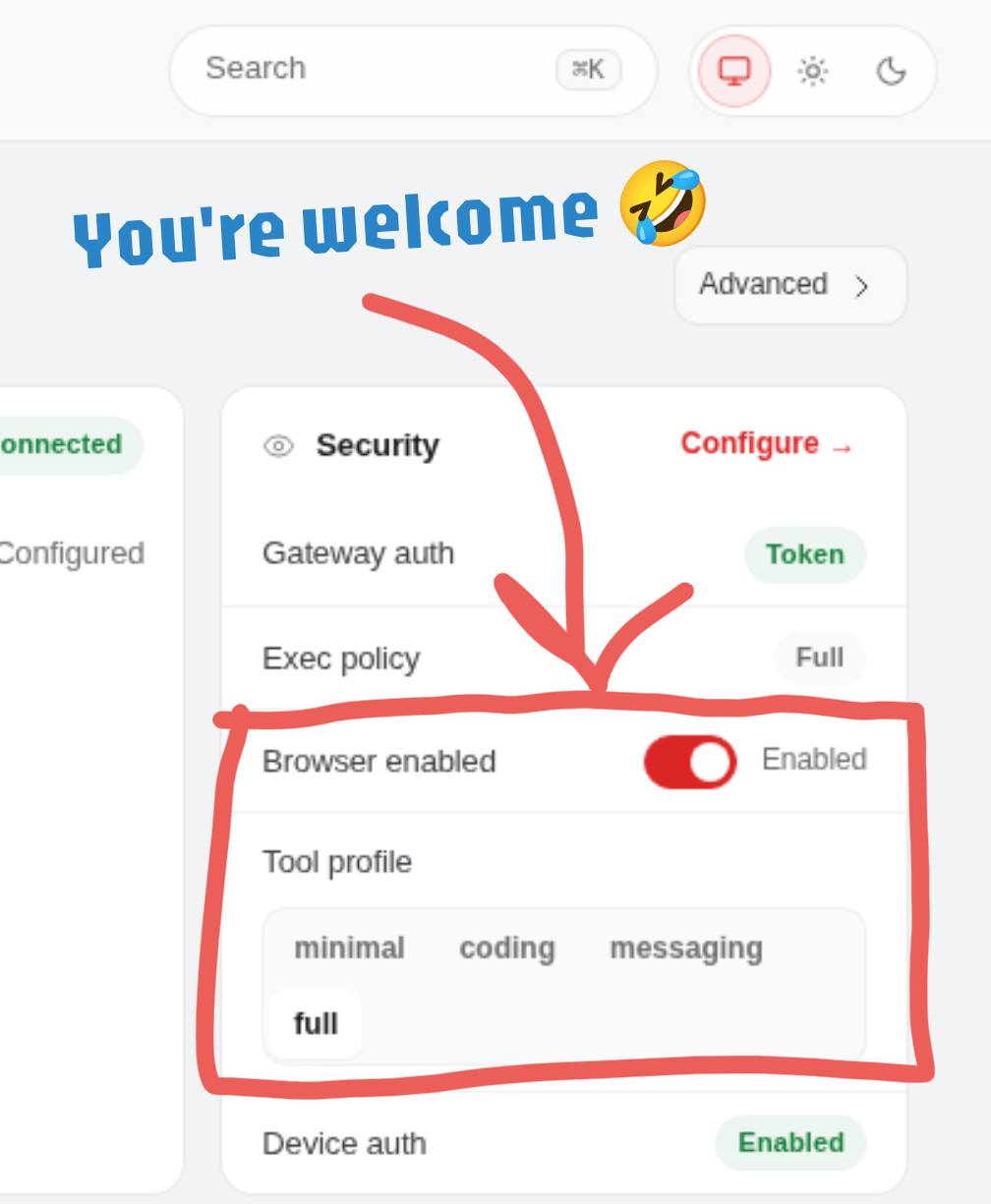
Jeff's accepted PR added Tool Profile and Enable Browser to the quick settings panel. That saves a few minutes per install and update, and it reduces the chance of nontechnical operators digging through config files just to turn on the controls their AI Employee needs.
It matches the bigger theme of the release: load what you need, expose the decisions that matter, and keep the rest of the system from becoming setup friction.
For founders, the win is not "new runtime architecture." The win is less setup drag and more reliable AI Employee execution.
OpenClaw drove the model loop itself, which worked, but meant extra translation between OpenClaw's harness and OpenAI's native agent runtime.
Codex handles the OpenAI turn. OpenClaw handles the surrounding product: channels, personas, memory, tools, scheduling, media, and gateway behavior.
The system is easier to operate because common controls are surfaced, tool catalogs do not overload the initial prompt, and final messages are routed deliberately.
Jeff's post also called out the rest of the 2026.5.12 release as an operator-quality update, not just a model-routing change.
Fallback runtimes help avoid silent failures when the preferred path cannot complete the job.
Telegram was rebuilt with isolated polling and durable spool behavior for steadier messaging operations.
Bedrock, Slack, OpenShell, Vertex, and WhatsApp moved toward a smaller core with externalized plugins.
The release included improvements around Windows sandbox behavior, credential resolution, and transcript redaction.
Explicit delta frames make stream behavior clearer for OpenClaw's surrounding gateway layer.
Scroll modes and interface improvements tighten the experience for web-based agent channels.
An AI Employee is not just a model in a chat box. It is a working system with permissions, memory, channels, tools, and human-facing judgment.
The model can spend less context on loaded tool catalogs and more attention on the actual job.
Operators can make key setup choices in quick settings instead of editing config for every basic install or update.
Codex-backed OpenAI turns prove a pattern OpenClaw can bring back to other providers: cleaner tool boundaries, smaller prompts, and structured quiet outcomes.
VA Staffer helps founders turn AI from an interesting chat window into an operating layer: persona, workflow, memory, permissions, channels, and human support around the work.
Beau helps turn source posts, technical updates, screenshots, and operator notes into public-facing assets that can be reviewed, shared, improved, and used by the team.