Jeff,
Look at your calendar this week. How many blocks are dedicated to things that shouldn't require your brainpower? Emails that could be templates? Data entry that is routine?
Time is the only non-renewable resource you have. Every hour spent managing operational friction is an hour you are not spending on high-leverage activities.
Stop being the Chief Operator of a company that should be run by systems.
CTA: Book a 15-minute 'Time Audit' call here: [Link to Booking]. We identify the immediate 5 hours you can claw back this week.
Gemma4 benchmark for OpenClaw teams
Gemma4 Benchmarked in OpenClaw: What It Excels At
A practical read on Gemma4’s speed, reasoning, and context behavior, and the kinds of AI workflows it should be used for.
Result: Strong local output quality on short-to-medium prompts in a real OpenClaw workflow.
Core finding: Gemma4 handles reasoning and content tasks well, but large-context prompts degrade into longer lag windows.
Recommendation: Best fit for batch assistants, internal workflows, and draft generation. Use higher-tier routing for real-time client-facing chat.
Executive verdict (in plain English)
This is a solid proof-of-concept experiment that validates the architecture, but not yet a finished production pattern for high-variance customer-facing workloads.
Experiment score:
Usefulness: 8/10 | Reliability: 7/10 | Readiness for rollout: 6/10
Usefulness: 8/10 | Reliability: 7/10 | Readiness for rollout: 6/10
7.0 / 10
What was tested
The test combined architecture, prompt workload, and generated output quality from a prompt-driven multi-step experiment.
Objective
Run local Gemma4 behind OpenClaw without changing agent config
By moving Ollama from the default service port and inserting a tiny transparent proxy on OpenClaw’s expected port, they were able to monitor token metrics for every generate/chat request while keeping existing OpenClaw wiring intact.
Prompt task
Generate a 5-email founder-facing sequence
Targeted prompts asked for pain-point-specific emails (time drain, missed opportunities, burnout, scaling, and final pitch), each with subject line, preview text, CTA, and a direct no-fluff tone.
“The only issue found so far: Gemma4 refused to send a file attachment on Discord in at least one run. Switched back to a different model to complete posting.”
This is worth tracking in workflow design even if it is not a model-quality flaw; it can be platform-specific integration behavior.
Deeper technical analysis
This section keeps the focus on Gemma4 model performance and behavior, then aligns that signal with where this model fits in practice.
| Measure | Observed Result | Interpretation |
|---|---|---|
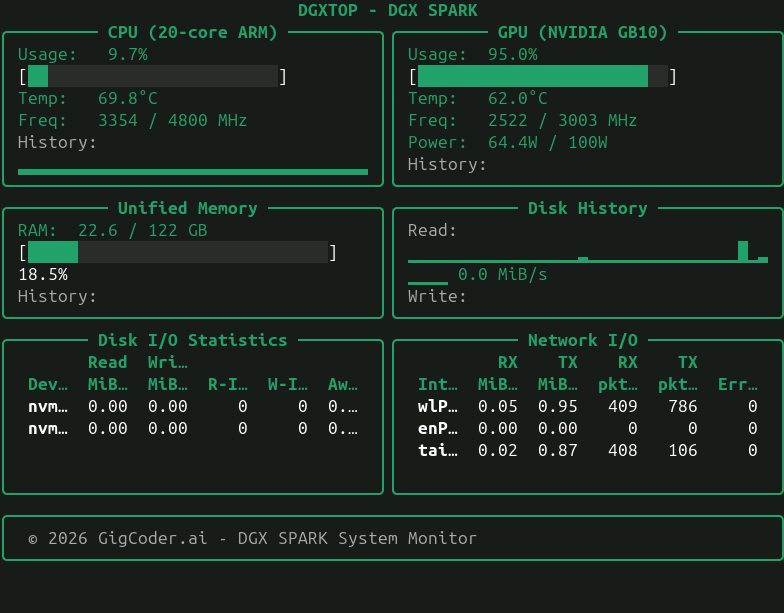
| Model footprint | Gemma4 runs on 32GB-class hardware; ~21.4GB observed in this run (including 3–4GB OS overhead) | Good signal for desktop-class local deployment, with room to co-host a lightweight OpenClaw agent stack. |
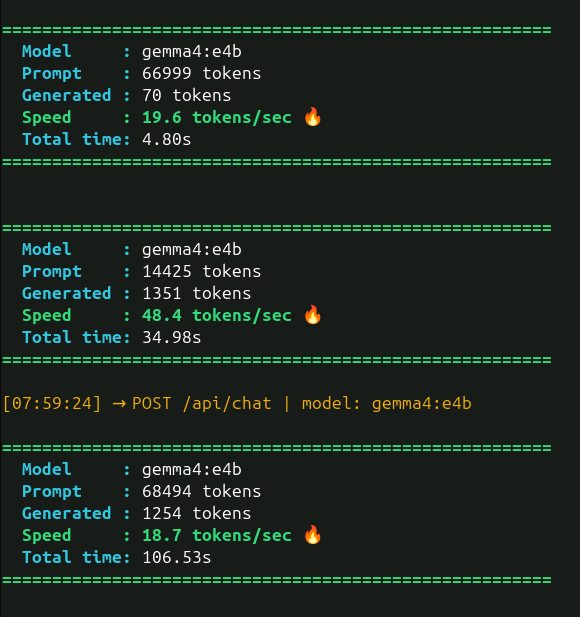
| Small-context throughput | ~48 tokens/sec (14k prompt, 1351 generated) | Excellent for short-to-midsize generation loops and quick internal drafts. |
| Large-context throughput | ~18–20 tokens/sec at 66k+ token prompts | Still usable for batch processing, but too slow for long interactive sessions where sub-second responsiveness matters. |
| End-to-end latency | Longest sample was ~106 seconds for ~68,494 prompt / 1,254 generated | Too long for “real-time” UX unless user expectations are clearly set. Great for background jobs, less so for live user chat. |
| Model positioning from Google | Open-source, Apache 2.0 model family built for advanced reasoning, agentic workflows, vision/audio/multimodal tasks, and long-context handling. | The architecture matches the intended use case for local-first agents: useful when you want frontier-like capability without depending on a single proprietary endpoint. |
What I liked
- OpenClaw + Gemma4 is strongest in short and mid-length tasks where output speed remains acceptable.
- Tool-heavy agent loops are viable as long as you keep large-context prompts staged.
- Given hardware constraints, the 4B flavor is a practical local model for high-leverage assistants.
What I flagged
- For long sessions, users still feel latency quickly; Gemma4 is best kept in batch and support workflows until confidence is proven.
- Output quality is strong, but integration paths (Discord/files) should be validated by your own stack before public release.
- Keep prompt size discipline in place to preserve predictable turn times for clients and team members.
What Google says Gemma4 is for
Short version from Google’s launch notes (plus our one-line test context).
Official promise
Gemma4 launch brief
- Most capable open model family Google has released to date, built for advanced reasoning and agentic workflows.
- Designed for local and smaller-device deployment while scaling into workstation-class use.
- Strong multimodal, vision, and audio capabilities with long-context support.
- Apache-2.0 licensing, making it practical for teams that need ownership and flexibility.
Our test lens
How this experiment was run
We used OpenClaw with a local Python proxy script to intercept and benchmark live traffic between Ollama and OpenClaw on our Tailnet setup. The goal was purely to measure real model behavior in a real agent loop, not to harden a public proxy service.
Short takeaway: we’re not validating proxy architecture; we’re validating Gemma4’s real operating profile when paired with OpenClaw at local scale.
Email sequence output: where it lands
Great structure and progression. The original model output is included below so readers can see what this produced, not just the summary judgment.
Strength
Stage clarity
Each email maps cleanly to one pain point. That is exactly the right way to avoid confusion and keep momentum.
Strength
Tone
Direct, operational, and practical with no fluff. Fits founder audiences and VA/operations positioning.
Strength
CTA consistency
Each email has a next action, which makes behavior testing and follow-up cleaner.
Improve
Personalization
Replace fixed salutations with merge fields so this can be deployed as sequence copy and not a one-off draft.
Improve
CTA quality
Some CTAs remain placeholders. Add one precise action per email with a single primary conversion path.
Improve
Trust block
Add one proof sentence before the final pitch so the final ask reads as validated advice rather than a hard sell.
Full output from this run (provided by the model)
Use this as a starting draft. Replace placeholders and tune voice for your brand.
Jeff,
I want you to calculate the cost of inaction.
You are too busy doing the work to be on the work. Opportunities are becoming abstract concepts you don't have the bandwidth to chase.
This is about opportunity bandwidth. If you can't dedicate focused time to growth, you cap your growth ceiling.
CTA: Reply "OPPORTUNITY" to this email. I will send you a one-page diagnostic template to measure your current opportunity leakage.
Jeff,
We are all addicted to the myth of perpetual hustle. If we just work harder, the problem solves itself. It will not.
Burnout is a function of systemic overload, the point where effort far exceeds what your system can process repeatedly.
Your business needs a backbone, not just a caffeine IV drip.
CTA: If operational fatigue is hitting you, it's time for a system architect. Let's look at a support structure.
Book a call: [Link to Booking].
Jeff,
The difference between a profitable side hustle and a scalable enterprise is documentation. One relies on institutional knowledge held by one person (you). The other runs whether you are awake or asleep.
Scaling isn't hiring more hands; it's building repeatable systems.
This is where VA Staffer steps in. We don't just fill tasks; we build the operating layer around your brilliance.
CTA: Tell me your single most complex, repeatable process (e.g., 'Client Onboarding'). I'll give you a 3-step overview of how we systemize it.
Reply with the process name.
Jeff,
We have seen the problem (Time Drain, Lost Opportunities, Burnout, Scaling Failure). The solution is not more effort; it is better delegation.
VA Staffer is not a virtual assistant service. We are your outsourced Operations Layer. We combine AI workflow orchestration consistency with human strategic oversight.
We build the self-correcting, repeatable machinery behind your success.
CTA: We are ready when you are. Click here to schedule your final architecture review call. We finalize your operational stack.
Verdict on this output: strong first draft framework (8/10) and production-ready after light editing and data-variable merge. Keep the sequence, localize language by stage, then split into two variants for A/B tests.
Bottom line
This experiment proved the operating path is technically valid and useful.
My read after the full pass
If your use case is internal operations, batch content generation, and controlled tool workflows, this setup is already useful enough to build from. If your use case is customer-visible, high-latency-sensitive interactions, treat this as “phase 1 foundation” only. Add routing, model selection logic, and observability before broad rollout.