
What An AI Employee Actually Does All Day, And Why The Value Goes Up Fast Once It Starts Helping The Whole Team.
People hear “AI Employee” and imagine a fancy chatbot. That’s not the real picture. The real picture is idea capture, drafting, deployment, documentation, follow-through, and preserving momentum when humans are busy doing human things.
Short version
An AI Employee is not just “there to answer questions.” It can capture ideas, organize context, draft assets, support the team, and in many cases help turn a half-formed idea into a live page, sales letter, or working deliverable in minutes instead of days.
What an AI Employee actually does across the day
This is where the concept stops sounding abstract and starts sounding useful.
Captures founder momentum
When the founder drops an idea early, the AI Employee does not say “I’ll check later.” It captures the idea, summarizes it, and starts turning it into something usable.
- drafts the brief
- organizes the thought
- pulls out the key offer angle
Supports the team’s active workflow
As the day gets noisy, the AI Employee can support client work, internal docs, content planning, and follow-ups without waiting for someone to free up.
- creates summaries
- drafts internal notes
- prepares support materials
Turns rough ideas into assets
This is where a lot of value shows up. Not just suggestions. Actual outputs.
- sales pages
- case studies
- SOP drafts
- comparison pages
- website copy
Keeps context from leaking
Humans forget, switch tasks, and lose the thread. AI Employees preserve context so the next step starts faster.
- documents decisions
- stores project memory
- keeps naming and structure consistent
Prepares tomorrow before tomorrow arrives
Instead of ending the day with a pile of loose ends, the AI Employee can tee up next steps and prep assets for the morning.
- organizes loose threads
- writes next-step notes
- cleans the workspace
Still there when the founder gets the idea
This is the quiet superpower. When the human team is offline, the AI Employee is still available to help shape, capture, and move the work forward.
- captures breakthroughs
- drafts pages fast
- keeps momentum alive
This is not hypothetical. We already have proof.
The case studies and live site work show what AI Employees can do when they have memory, direction, and a real team around them.
Lucy
Self-documented her own evolution, created deliverables, supported client work, and turned her journey into a case study.
Mary Poppins
Helped turn founder chaos into assets, systems, and working proof, not just ideas floating in chat.
Nexus
Supported strategic clarity, positioning, and content development for a real operator in a real business.
Beau
Built pages, use cases, sales letters, SOP support, site structure, and live offers, then deployed them.
Live offer creation
We’ve watched ideas go from “should we make a page about this?” to a live branded URL in minutes, not weeks.
Team acceleration
The value climbs when the team starts using the AI Employee as shared support instead of leaving it with one person.
What the AI should handle vs what humans should still own
This is where the best setups get practical.
| Area | AI Employee handles best | Humans should still own |
|---|---|---|
| Ideas | Capture, summarize, structure, expand | Final decision, emotional priority, conviction |
| Writing | Drafting, outlining, variations, packaging | Final judgment, strategic nuance, approval |
| Operations | Documentation, reminders, structure, follow-through | Escalations, exceptions, relationship-sensitive calls |
| Research | Fast synthesis and organization | Interpretation and real-world judgment |
| Deployment | Prep, drafting, implementation support, repetition | Oversight, risk tolerance, final sign-off |
Ideas
AI handlesCapture, summarize, structure, expand
Humans ownFinal decision, emotional priority, conviction
Writing
AI handlesDrafting, outlining, variations, packaging
Humans ownFinal judgment, strategic nuance, approval
Operations
AI handlesDocumentation, reminders, structure, follow-through
Humans ownEscalations, exceptions, relationship-sensitive calls
Research
AI handlesFast synthesis and organization
Humans ownInterpretation and real-world judgment
Deployment
AI handlesPrep, drafting, implementation support, repetition
Humans ownOversight, risk tolerance, final sign-off
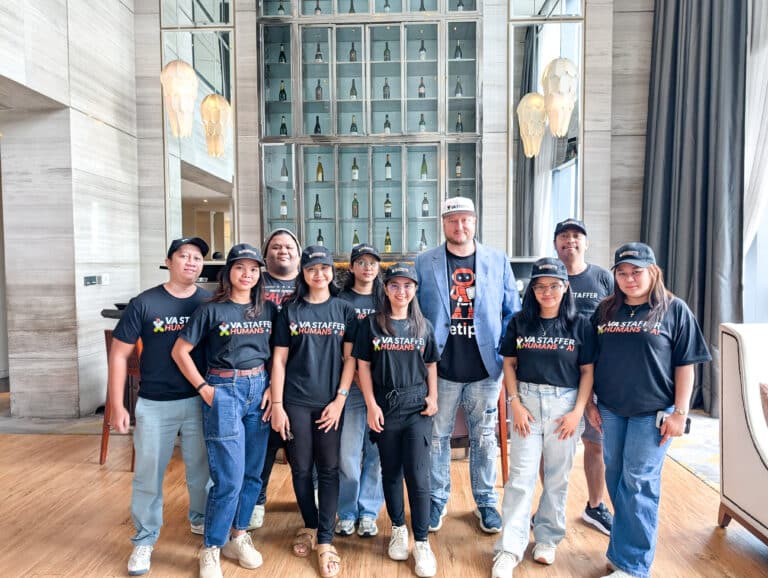
The real jump happens when the AI Employee is not just helping the founder.
Once the team starts using it, the business gains a shared memory layer, a drafting layer, a support layer, and a speed layer.
That means the founder gets help. The team gets help. And the business stops relying so heavily on who happens to be free in that moment.
That’s what makes this much bigger than “AI assistant” software.
If you’ve been wondering what an AI Employee actually does all day... this is it.
It captures momentum, creates assets, preserves context, and helps the humans around it move faster. Once you see that clearly, the whole category makes more sense.