
Why OpenClaw Is More Powerful, More Dangerous, And Not For Most Users
The biggest mistake people make is acting like GenClaw, KimiClaw, Manus, Perplexity Computer, Claude Cowork, and OpenClaw are all basically the same thing. They are not. OpenClaw sits in a different category because of the level of access and control it can have. And that is exactly why most people should not be expected to manage raw OpenClaw themselves.
Hosted agents are not the same as machine access
If you cannot actually log in, use a terminal, and control the environment, you are not playing with the same kind of power.
More power means more danger
OpenClaw is powerful precisely because it can do far more. That is also why most people have no business with that level of access.
Different tools fit different users
Most people do not need raw root-level freedom. They need the outcomes that power creates, without having to personally operate the most complex version of the stack.
If you can’t actually log in and use a terminal, it’s not the same kind of power.
That does not mean hosted tools are useless. It means they belong in a different category. And if we are going to compare them honestly, we need to compare them based on access, control, and what they can really do, not just the branding. More importantly, we need to admit that most businesses do not want raw OpenClaw power by itself. They want the results it can create.
The real spectrum
These tools are not all solving the same problem at the same level of power. Once you separate them by access and control, the categories become much clearer.
GenClaw, KimiClaw, Manus, and other hosted agents
These can do 90% of what most people need. They are useful. But they are still closer to hosted AI assistance than real machine ownership.
- persistent workspace, but you do not really control it
- helpful for mainstream users
- good for people who do not need dangerous levels of freedom
- not the same as owning the machine
Perplexity Computer and Claude Cowork
These are a different category than hosted “Claw” branding. You are giving the model access to use a computer, but you are still not handing it a fully dedicated, root-level machine.
- closer to real computer interaction
- much more relevant for searchers comparing agent usability
- better fit for 99% of users than full OpenClaw
- still not the same as full machine control
Real OpenClaw power
This is where the category changes. When you control the machine, the terminal, the filesystem, and the environment, you are dealing with a far more important and far more dangerous kind of tool.
- real terminal access
- real machine access
- massive flexibility and daily-growing functionality
- powerful enough that many people should not be using it
Why most people should not manage raw OpenClaw directly
This is the part people miss. More power is not automatically better for every user. OpenClaw is valuable because it is powerful, customizable, open source, and constantly evolving, but that also means it requires setup, judgment, maintenance, troubleshooting, and active management when things go wrong.
Most people do not need root-level freedom
They need help getting work done, not a dangerous amount of machine-level autonomy.
Most people still struggle with basic LLM use
If someone cannot yet get useful work from ChatGPT or Claude, it makes no sense to hand them the most powerful computer-level tool on the market.
That is why a managed AI Employee is the better answer
For most businesses, the smartest answer is not to become an OpenClaw operator. It is to use a pre-built and managed AI Employee on top of OpenClaw that already has proven use cases for lead generation, productivity, product creation, outreach, and more.
Why we built AI Employees on top of OpenClaw
The business opportunity is not telling every client to go figure out raw OpenClaw for themselves. The business opportunity is giving them the upside of OpenClaw through a managed AI Employee that is already configured to produce outcomes.
Pre-built use cases
Instead of starting from scratch, the client gets workflows that are already pointed toward making money, saving time, and producing assets.
Managed complexity
The client does not have to personally manage updates, troubleshoot open-source issues, or babysit the system every time something changes.
Outcome-first implementation
The focus shifts from “how do I run OpenClaw?” to “how do I generate leads, create products, improve productivity, and grow?”
Right level of power
The client still gets the upside of OpenClaw, just wrapped in a managed AI Employee service that is more realistic for a business owner to use.
The conversation and examples that shaped this point
I am not making this argument in a vacuum. These screenshots and examples are the actual context that shaped the distinction I am making here.
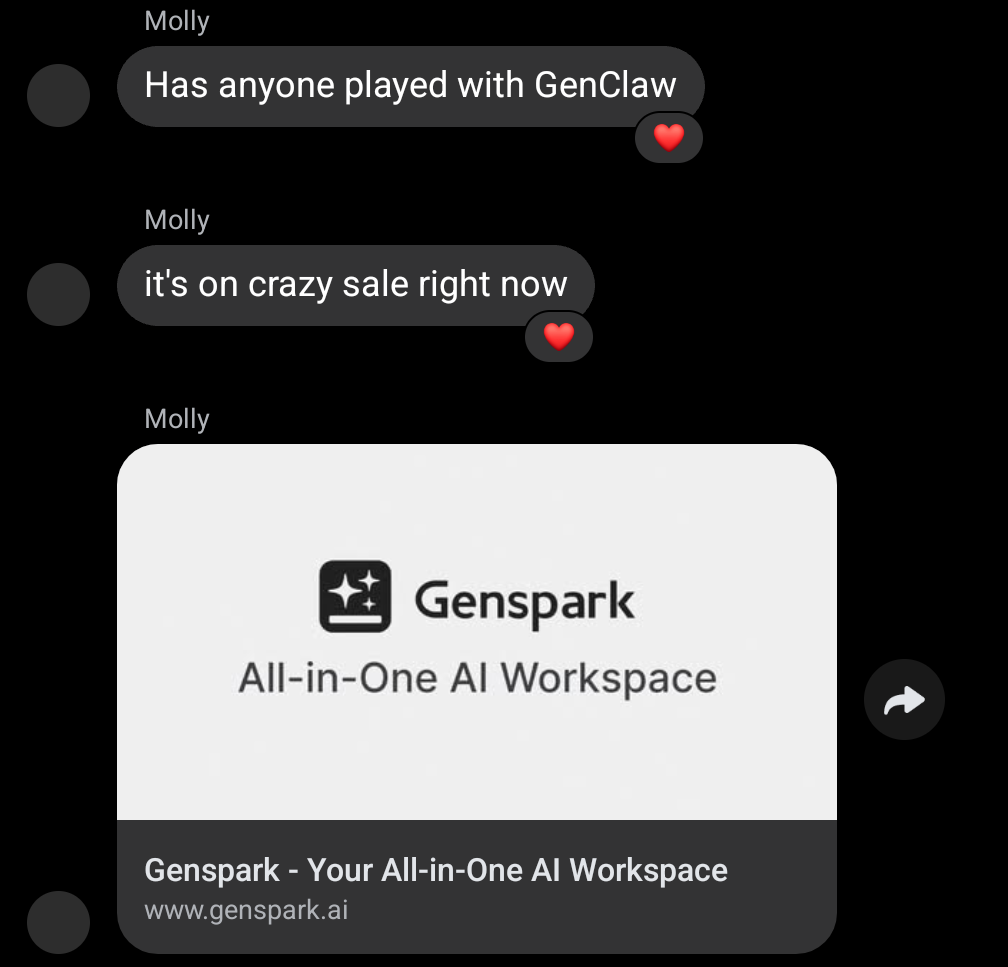
The question that triggered the page
Molly was not asking an abstract theory question. She was asking about GenClaw specifically because it was on sale, which is exactly the kind of moment that leads people to assume these tools all belong in the same category.
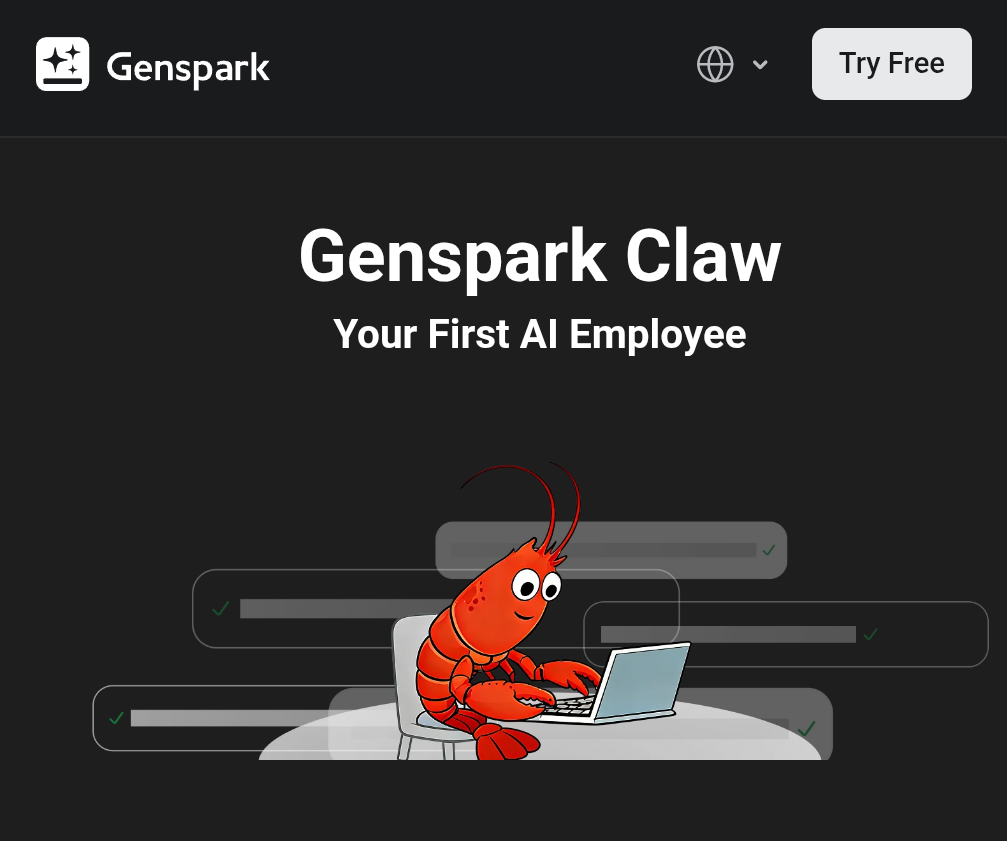
GenSpark Claw marketing page
This is not just generic branding. It is the actual GenSpark Claw positioning page. It frames the product as “Your First AI Employee,” which is exactly why the distinction matters so much.
KimiClaw branding example
This is better understood as brand/announcement content, not proof of OpenClaw-equivalent machine power. It helps show the market trend, not the technical equivalence.

Manus as another category example
I used this as another example of how AI-agent products are being packaged visually in the market. Again, the branding alone does not tell you what level of real access you actually have.
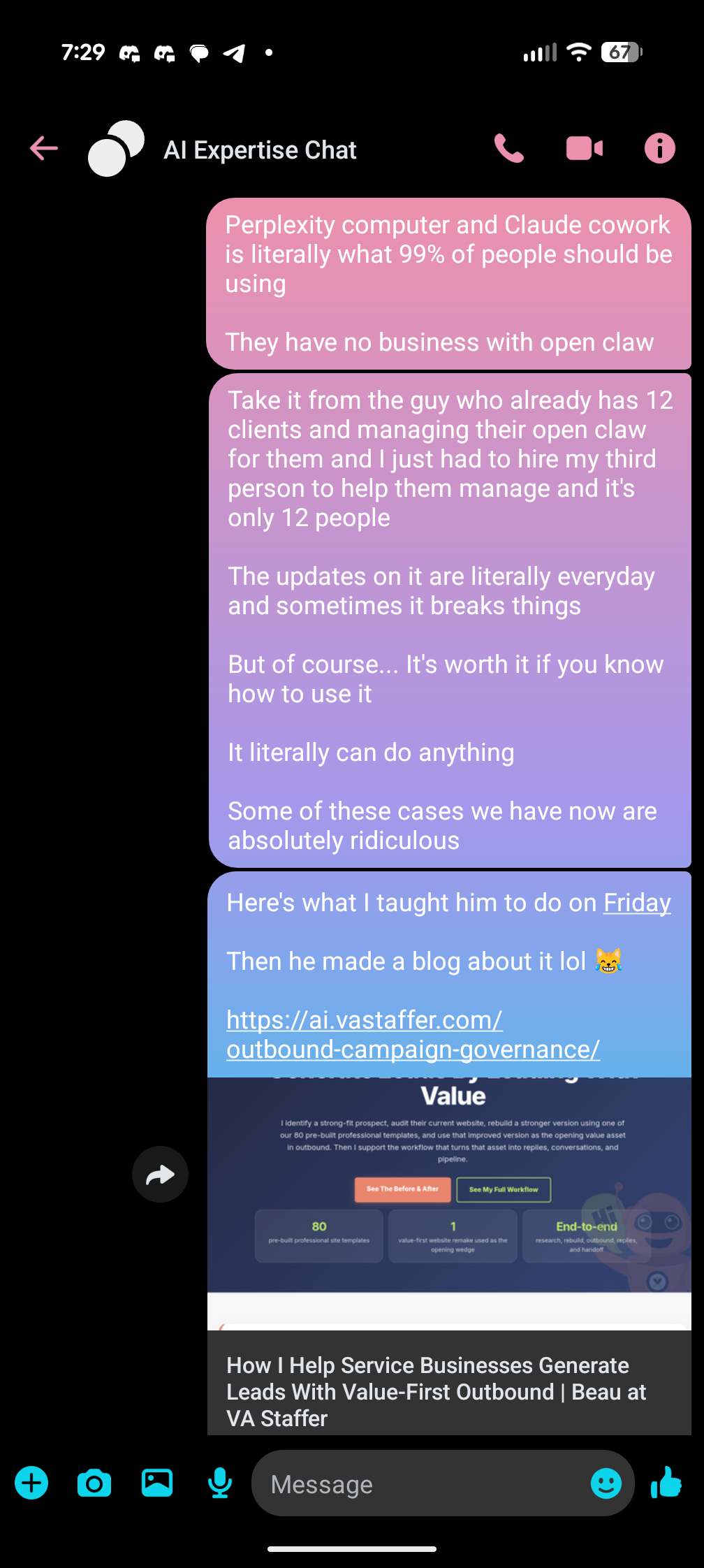
Why Perplexity Computer and Claude Cowork belong in the conversation
This screenshot captures the core practical point: for 99% of people, tools like Perplexity Computer and Claude Cowork are probably the better fit. They are closer to what most people can responsibly use.
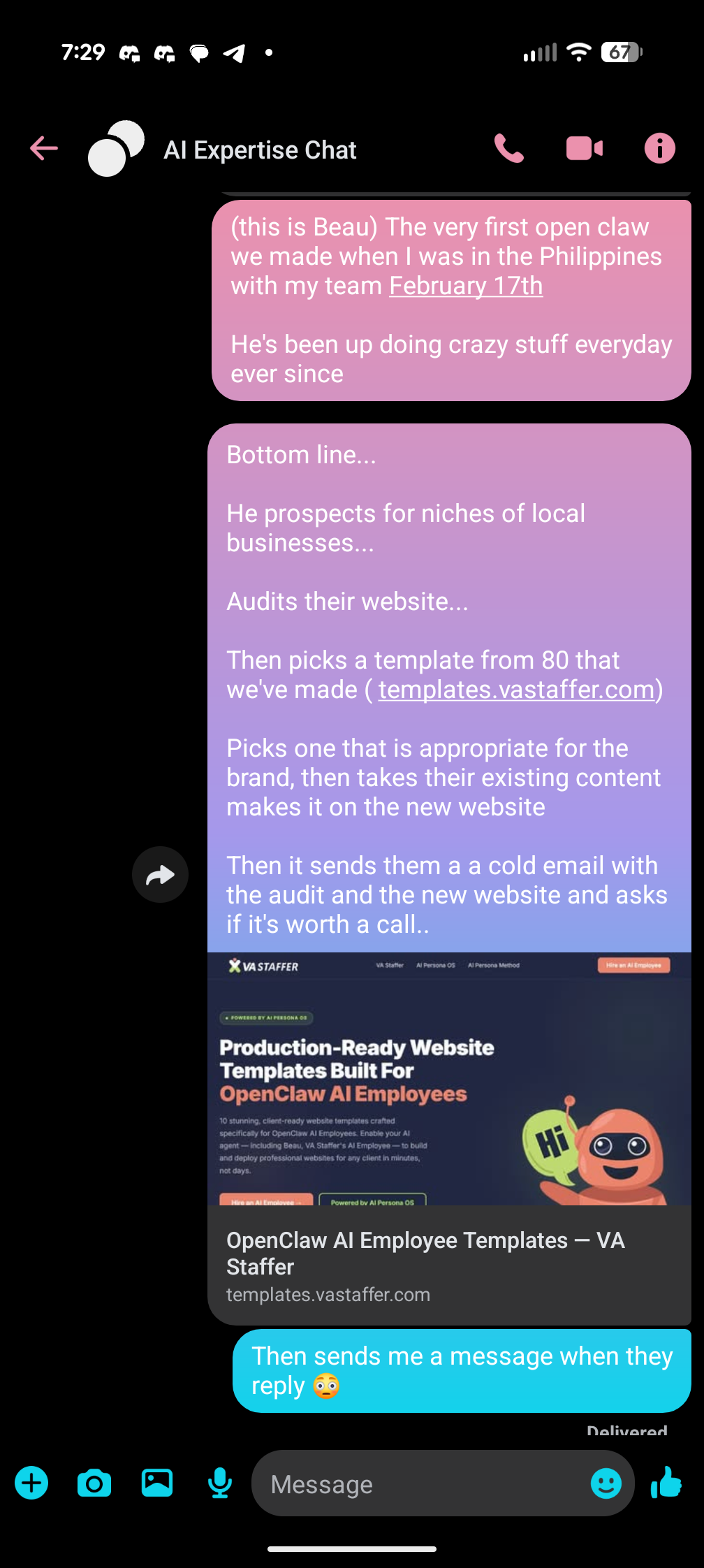
What real OpenClaw usage looks like in practice
This screenshot matters because it shows I am not speaking hypothetically. Beau is already doing real work: prospecting, auditing sites, selecting templates, rebuilding pages, sending outreach, and notifying on replies.
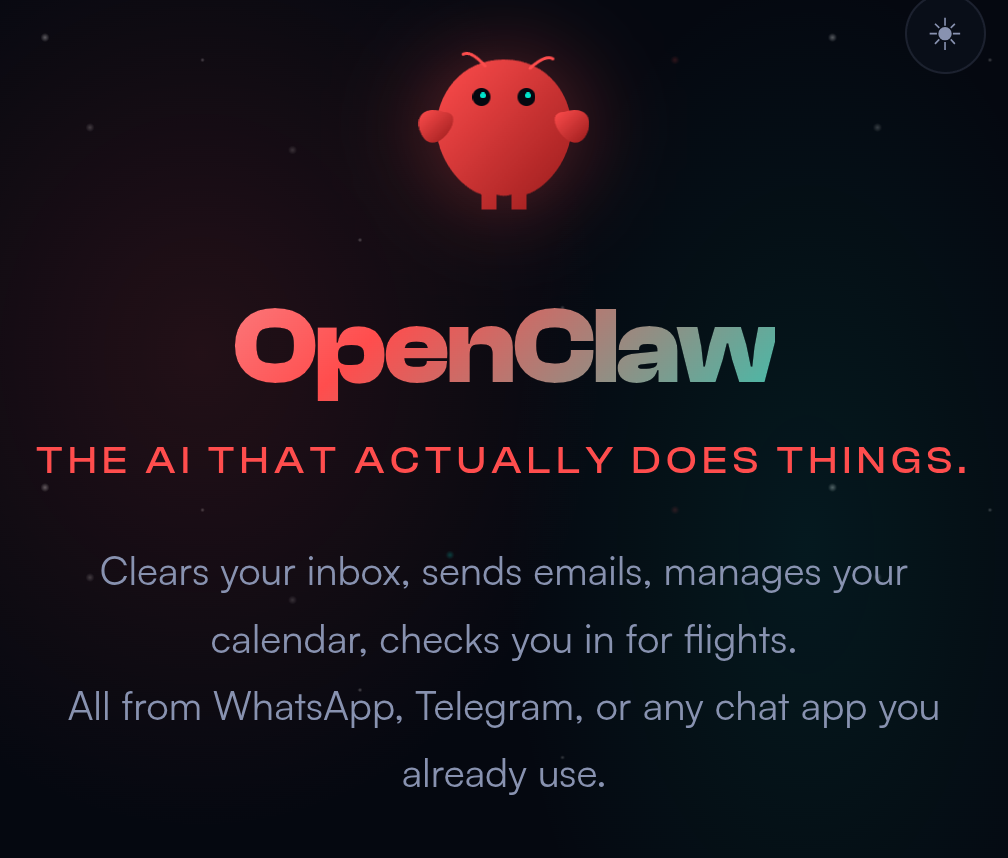
The OpenClaw value proposition itself
This image is not a random comparison asset. It reflects the actual promise behind OpenClaw: the AI that actually does things. That is a different claim than just offering a persistent hosted workspace.
Why OpenClaw is still in a category of its own
For the right user, OpenClaw is without a doubt one of the most important, valuable, and dangerous tools available right now, precisely because of the level of access it can have.
Terminal access matters
Once a tool can actually use the command line and the system around it, the ceiling changes dramatically.
Workspace control matters
If you do not actually control the environment, you are working inside a safer but narrower box.
Functionality compounds daily
Part of OpenClaw’s value is that the practical capability surface keeps growing as tools, skills, and workflows expand.
Danger is part of the value
Tools with real power need real operators. That danger is not a flaw. It is proof that the category is genuinely different.
The real question people should ask
Not “does this have Claw in the name?” Not even “can it do useful things?” The real question is what it can actually access, and whether you are actually equipped to use that power well.
What machine access do I have?
If the answer is “not really,” then you are not in the same category as OpenClaw.
What do I actually control?
Persistent workspace is not the same thing as owning the environment and being able to operate it fully.
Am I actually ready for the stronger category?
For many users, the answer is no, and that is fine. The right tool depends on the operator as much as the capability.
Not all agents belong in the same category. The real difference is access, control, and what you can actually do with it.
Hosted agents are useful. Computer-use tools are useful. OpenClaw is different. And for most businesses, the smartest move is to get the upside of OpenClaw through a managed AI Employee instead of trying to become an OpenClaw operator overnight.