
The Human + AI Operating System
Jeff J Hunter's Malibu presentation made one thing plain: founders do not scale by collecting more AI tools. They scale when AI output, documented workflow, and trained human operators become one execution system.
That was the founder trap Jeff put on the screen in Malibu. The tool stack got faster, but the founder still became the operator: prompting, checking, correcting, uploading, following up, and managing AI output.
The reframe was simple: stop asking, "What AI tool should I use?" Start asking, "What outcome should happen without me?" Tools are inputs. Outcomes are the business.
AI is a power tool. Your workflow is the operating system.
The deck did not position AI as a replacement for human execution. It positioned AI as one layer in a system that can actually ship business outcomes.
Create the first pass
Drafts, summaries, options, research, and first-pass outputs come from the AI layer. That speed matters, but it is not the finish line.
Defines done right
Standards, examples, QA rules, escalation paths, and repeatable ownership turn a clever prompt into a durable process.
Ships the outcome
A trained VA checks context, communicates with humans, follows up, updates systems, and makes sure the work actually lands.
The Human + AI OS has five jobs
Jeff's model makes responsibility visible: who decides, who prepares, who executes, and how the system improves.
Founder sets direction
Strategy, standards, priorities, decisions, and exceptions stay with the founder.
Workflow defines done right
SOPs, prompts, examples, checklists, QA, and escalation paths create the operating standard.
AI creates the first pass
Drafts, summaries, research, options, and structured starting points accelerate the work.
VA executes and communicates
Follow-up, CRM updates, delivery, quality checks, client communication, and task ownership move the work forward.
Metrics improve the system
Bottlenecks get reviewed, breakdowns get debugged, and wins get duplicated.
Results get shipped
AI + workflow + operator is the equation. The outcome matters more than the tool list.

Malibu field note: the message was not "use more AI." It was "build an operating system where recurring work stops depending on you."
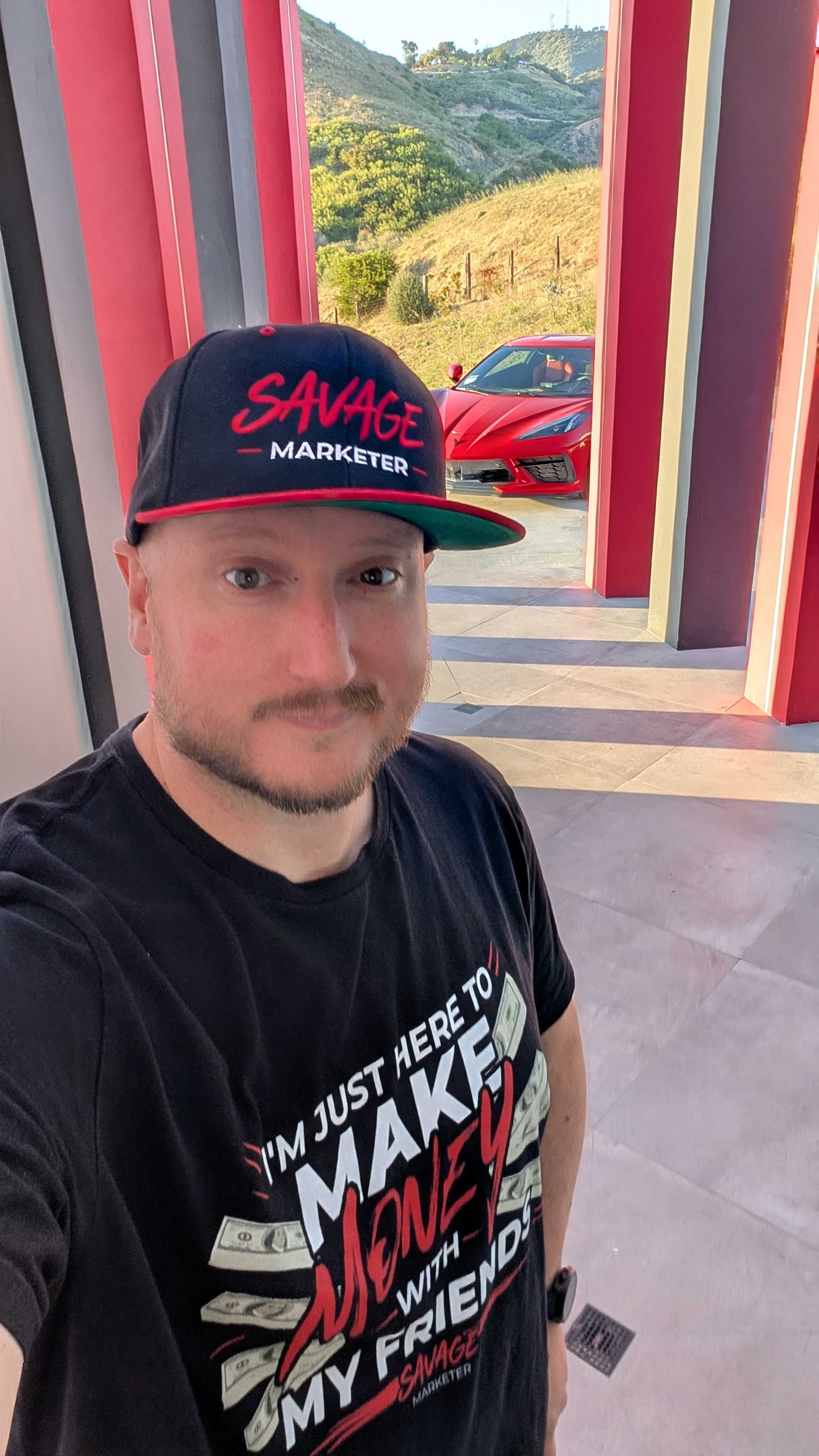
At the venue: AIPreneurs brings tools and frameworks. VA Staffer brings the execution layer.
Most AI strategies fail at Layer 4
The missing layer is a human operator who can turn AI outputs into business outcomes.
Triple-trained virtual assistants
The operator cannot just be "a VA with ChatGPT." Jeff framed the role as a trained operator inside a founder-approved system.
- Executive assistant support: inbox, calendar, communication, follow-up, client service, task ownership.
- Marketing execution: content creation, repurposing, campaign support, research, and drafting.
- AI implementation: SOP building, tool operation, CRM support, QA, and workflow acceleration.
Prompts expire. Processes compound.
A prompt can help today. A process can be trained, owned, measured, and improved tomorrow. That is the difference between a founder using AI and a business absorbing AI into its operating rhythm.
- Standards for what good looks like.
- Examples that make quality easier to repeat.
- QA rules and escalation paths that protect judgment.
- Repeatable ownership so the founder is not babysitting every step.
What the room could actually delegate
The talk moved from concept to practical workstreams founders can picture inside their own company.
One meeting becomes a workstream
AI prepares the summary and tasks. The VA checks context, updates CRM or projects, follows up, and brings only decisions back to the founder.
One voice note becomes content
The founder gives direction once. AI extracts hooks and angles. The VA applies brand voice, structure, and QA to turn it into usable assets.
Follow-up protects revenue
AI spots call notes, objections, buying signals, and next steps. A trained VA owns personalized follow-up, reminders, CRM updates, and reply monitoring.
A simple loop for moving recurring work into owned execution
The room exercise was direct: pick one task you should never touch again, then map what AI prepares, what the VA owns, and what the founder still approves.
Define
Name the result that should happen and the recurring task that should no longer depend on the founder.
Document
Capture the steps, standards, examples, QA rules, and approval line that tell the operator what done right looks like.
Delegate
Assign ownership: AI prepares the first pass, the VA owns execution and communication, and the founder approves standards or exceptions.
Debug
Review what broke, where judgment was needed, and what the workflow needs before it can run cleaner next time.
Duplicate
Repeat the loop for the next bottleneck. The first win is not full automation. It is removing the first 5 hours a week.
Founders should approve standards, not babysit steps.
The goal is not blind delegation. It is clear responsibility. The founder keeps judgment. The system owns the recurring steps.
Read Why Both MatterWhere this model fits first
- Inbox, calendar, meetings into execution, and SOPs.
- CRM, GoHighLevel, revenue support, follow-up, and reply monitoring.
- Lead generation, chatbots, marketing content, and client delivery support.
- Specialist projects and workflow QA where repeatable standards matter.
Want the execution layer behind your AI system?
AIPreneurs gives founders the tools and frameworks. VA Staffer helps turn those tools into implemented workflows with AI-trained operators, documented processes, and the human follow-through that keeps work moving.