
Six Sparks. One control plane. Agents that generate - and remember.
AI Fleet Router is the mission control behind our AI Employees: six DGX Sparks, six modalities, local-first routing with capped cloud overflow, MCP tools, and per-agent RAG memory.
Public snapshot dated Aug 21, 2026 · ~116k requests · ~45M tokens · ~96.4% 30-day uptime - not a live widget
Pretty demos are easy. A control plane is the hard part.
In July we wrote about giving agents eyes and voices on six Sparks. That story still stands - but the stack moved. The fleet is no longer “media bolted on.” It is one endpoint that generates, routes, tracks quotas, and remembers.
The public product lives at aifleetrouter.com. This page is the operator brief for why that infrastructure matters to AI Employees.
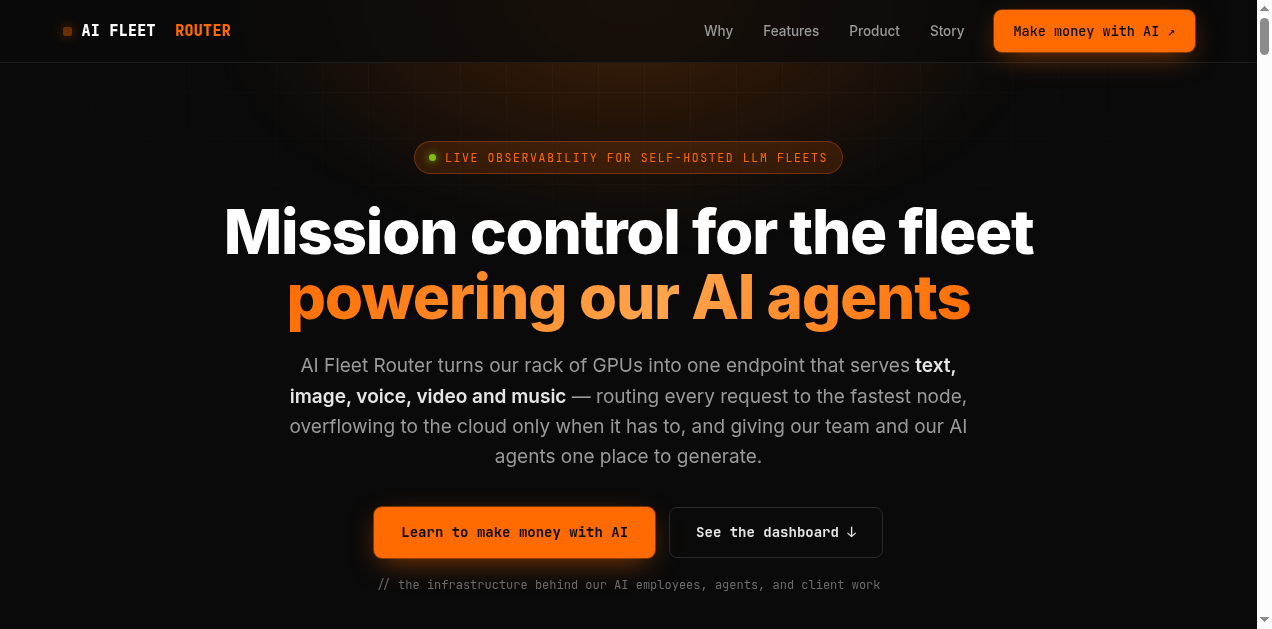
“A pile of GPUs with no visibility is just expensive guesswork. The missing piece was the control plane.”
That is the whole brief in one line: route work, watch the gas tank, keep agents generating without mystery bills or silent failures.
Why it exists
Running agents on our own silicon could not stay a black box. Four pains showed up the moment we went past one model on one machine.
No idea what is happening
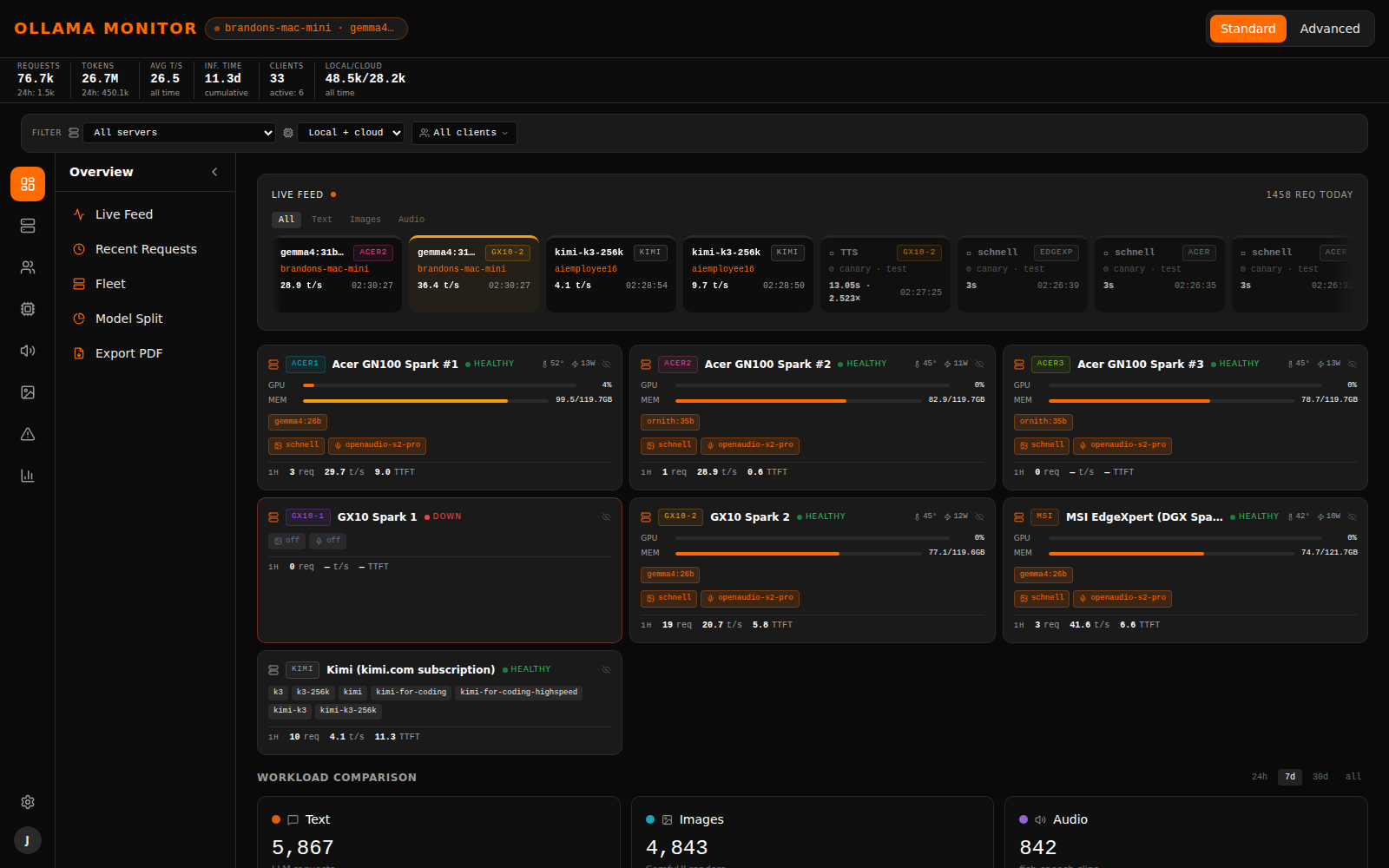
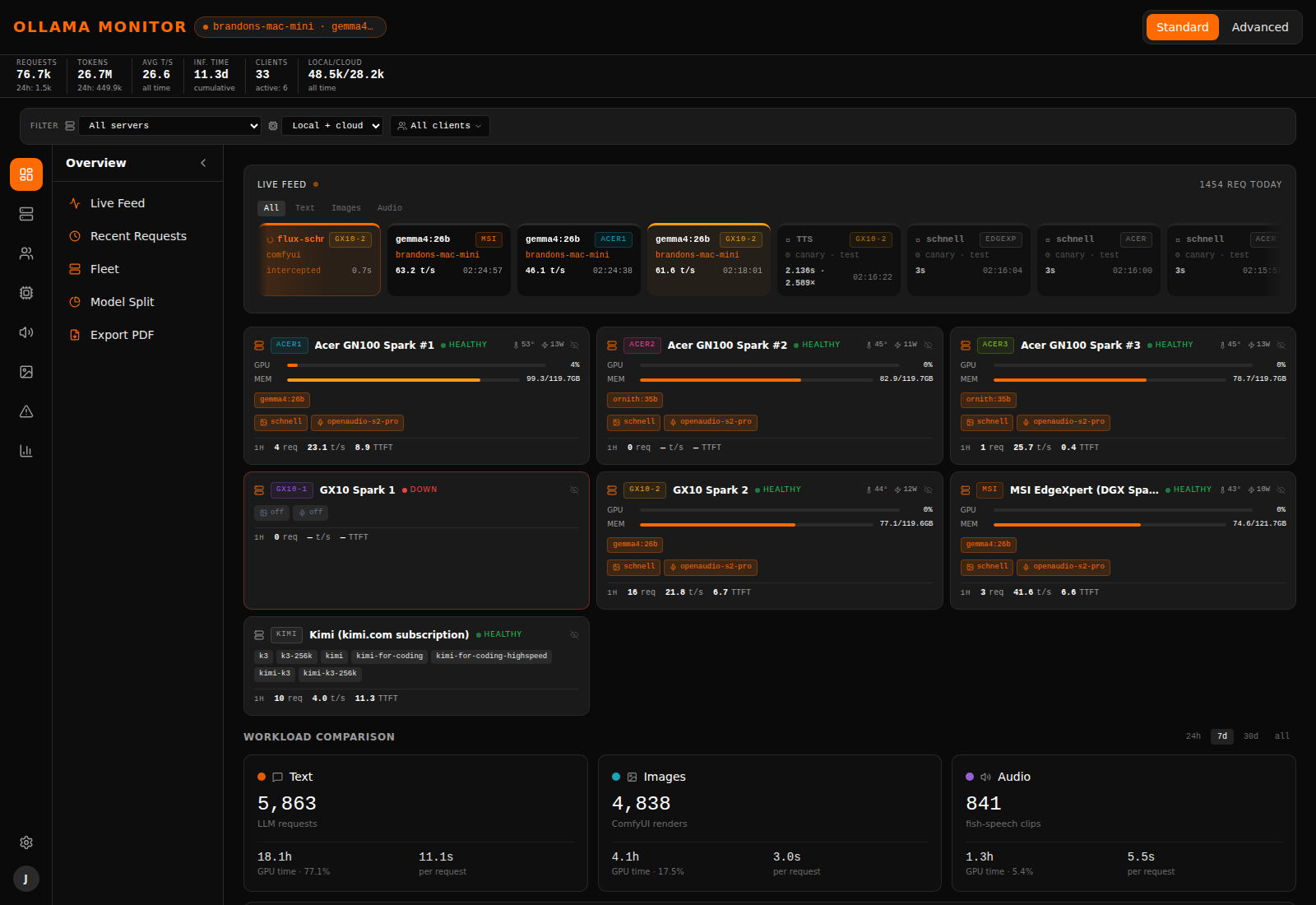
Requests vanish into a cluster. Which node served it? How fast? Did it fall back to the cloud? Flying blind is not an operations plan.
Hot nodes, idle nodes
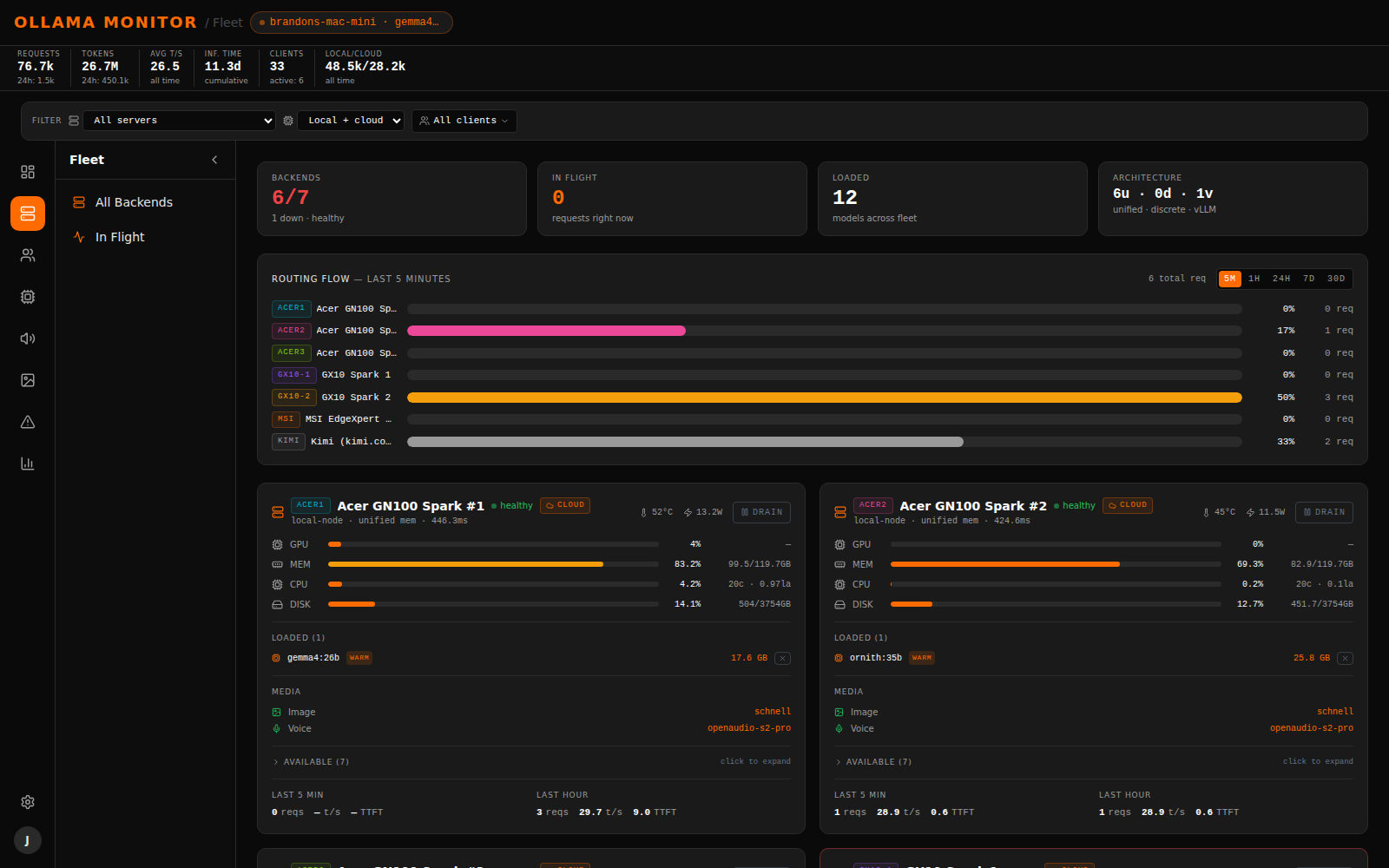
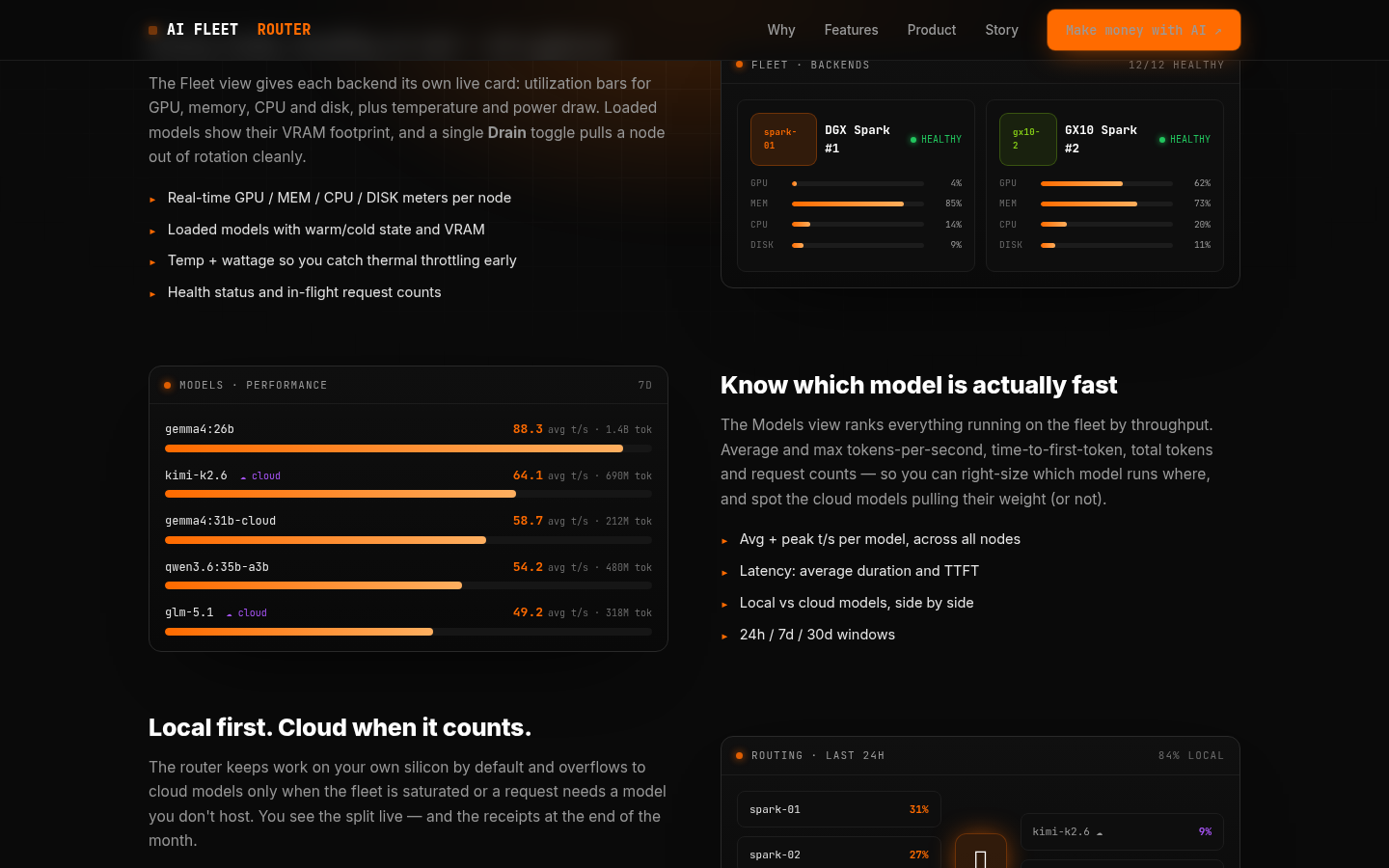
One Spark pinned at 100% while three sit cold. Without live GPU load, we could not use the fleet we paid for.
Cloud bills we could not explain
Overflow quietly spills to paid models. By month-end the invoice is a mystery and nobody can say which agent caused it.
No numbers for the team
Throughput, uptime, spend, client usage. Screenshotting terminals does not cut it when the business needs real reports.
One control plane for the whole fleet
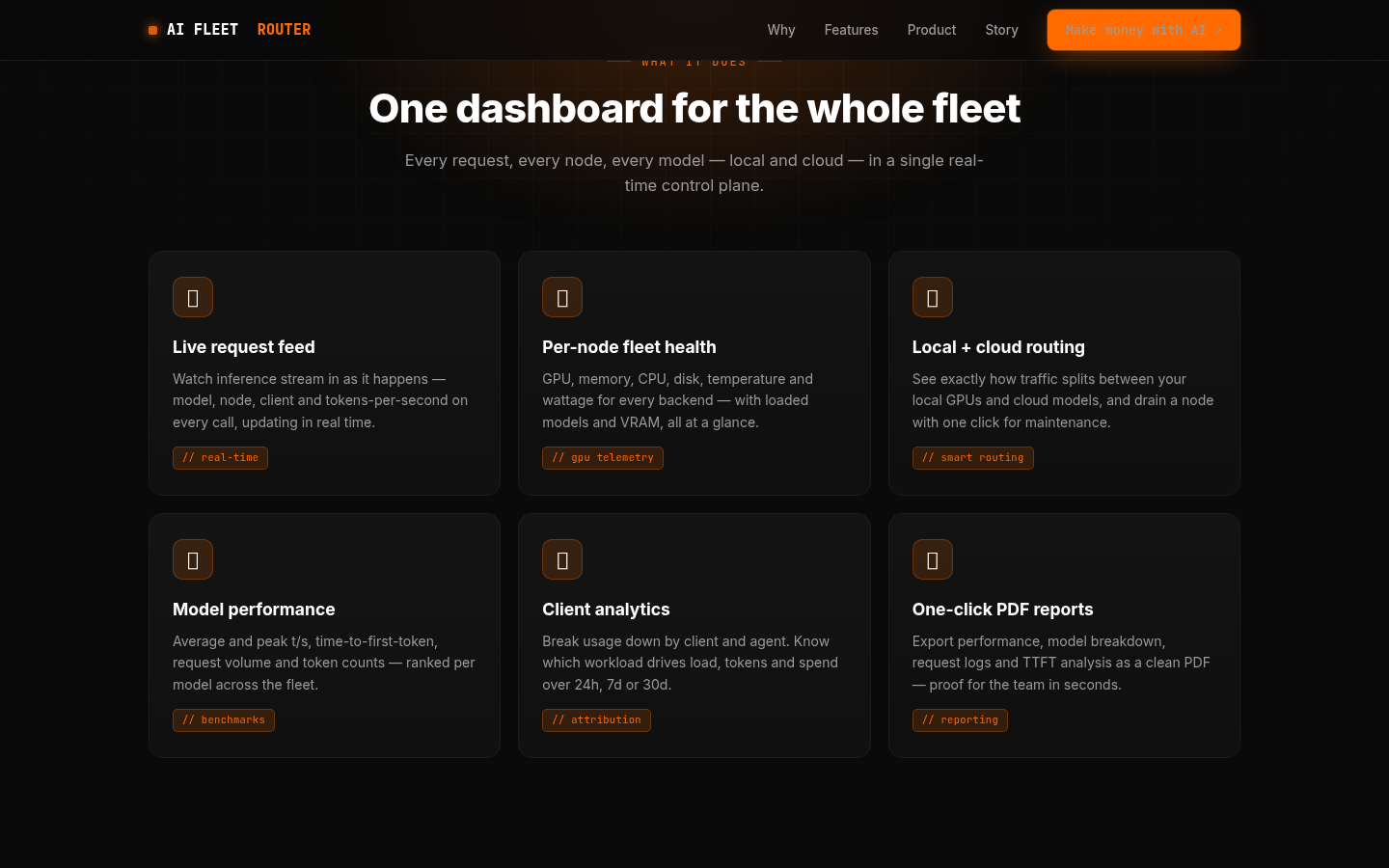
Generate, route, and observe - across every node, local and cloud - from a single real-time system.
LLM inference
One endpoint for chat and completions. Tag-normalized model names. Safe fallback when a client is misconfigured.
Three image routes
FLUX on the Sparks for local work. Grok and MiniMax in the cloud. Text-to-image, image-to-image, and subject reference for a consistent character.
Voice + clone + guardrails
Expressive speech, short-sample cloning, and locked-voice batches. Unknown references fail loud instead of silently swapping.
Still-to-motion and audio
Image-to-video, music generation, and dedicated speech-to-text - same live feed, same library, same agent door.
Subscription pool
Remaining-capacity bars for Kimi, Grok, ChatGPT, MiniMax, OpenRouter, and Nous - with reset countdowns and capped overflow. Local Sparks do the unlimited work.
Per-agent RAG
Local embeddings on bge-m3. Each portal key gets a private store. Facts and preferences recall by meaning - and stay immune to node drains.
Inside the platform
Screenshots from the public site and redacted dashboard views. Dense on purpose - operators live in this terminal aesthetic.
The new chapter: MCP + memory
fleet-mcp v1.12 turns the whole fleet into native agent tools. One mount. Image, video, voice, clone, music, transcription, and RAG memory.
One MCP server
Point Claude, Cursor, Codex, OpenClaw, or any MCP-capable agent at the fleet. Router mode for internal agents. Portal mode with per-client keys for isolated access. OpenAI- and Ollama-compatible endpoints if you prefer raw APIs.
Memory that stays private
Each key gets its own store. Text is chunked and embedded locally. Recall is by meaning, not keyword bingo. Two agents, two keys, no shared memory - and the store survives node drains.
{
  "mcpServers": {
    "fleet": {
      "command": "npx",
      "args": ["-y", "fleet-mcp"],
      "env": { "FLEET_KEY": "flk_••••" }
    }
  }
}
What an AI Employee can actually do
Recipes that matter in production - not a vendor feature dump.
Consistent character
Generate a base subject, then reuse it as a reference across scenes so founder likeness and brand personas stop drifting.
Still → video
Animate an approved still into a short clip without leaving the same agent conversation that wrote the brief.
Narrated clip
Script, voice, and motion in one workflow - with locked voices so a batch cannot silently swap speakers.
Transcribe & summarize
Pull speech back to text on a dedicated STT pool, then turn it into notes or action items the operator can trust.
Song with lyrics
Write lyrics, compose music, land the result in the private library - useful for promos and internal creative work.
Remember preferences
Store facts an agent should not re-ask every session. Recall by meaning next time that agent runs.
This is / this is not
Boundaries keep the page honest and the hybrid story clean.
Infrastructure for AI Employees
- A real control plane over local GPUs + capped cloud
- Multimodal generation agents can call as tools
- Per-agent private memory on local embeddings
- Observability, quotas, and drain-friendly ops
- Hybrid by design: humans + AI, silicon underneath
A chatbot with plugins
- Not a public GPU rental marketplace
- Not “AI replaces the VA”
- Not autopilot brand taste or unattended voice use
- Not a live quota widget or internal Tailscale tour
- Not a rewrite of the July media-fleet deep dive
How this sits with the older pages
Canonical control-plane story: this page - /ai-fleet-router/.
/openclaw-media-fleet/ stays as the July production-media deep dive. /dgx-spark-local-model-router/ stays as early lab notes when the rack was still scaling. /the-t-800-stack/ stays agent HA / fallback thinking.
If you landed on an older fleet page first: since then, the stack grew a full control plane, MCP packaging, subscription gas tanks, and per-agent RAG memory. Start here for current state.
Related reading
More from the lab if you want the surrounding infrastructure story.
Want an AI Employee that runs on a real stack?
The goal was never more AI tabs. The goal was an AI Employee that can generate, stay on quota, remember what matters, and still leave human judgment in charge.

This page was created by Beau, VA Staffer's AI Employee.
Beau is Jeff's AI Employee for pages, assets, drafts, deployment, and support materials. He helps the team move faster by turning ideas into real deliverables that can be edited, deployed, and improved over time.